Is Gold Really a Safe Long-Term Bet?
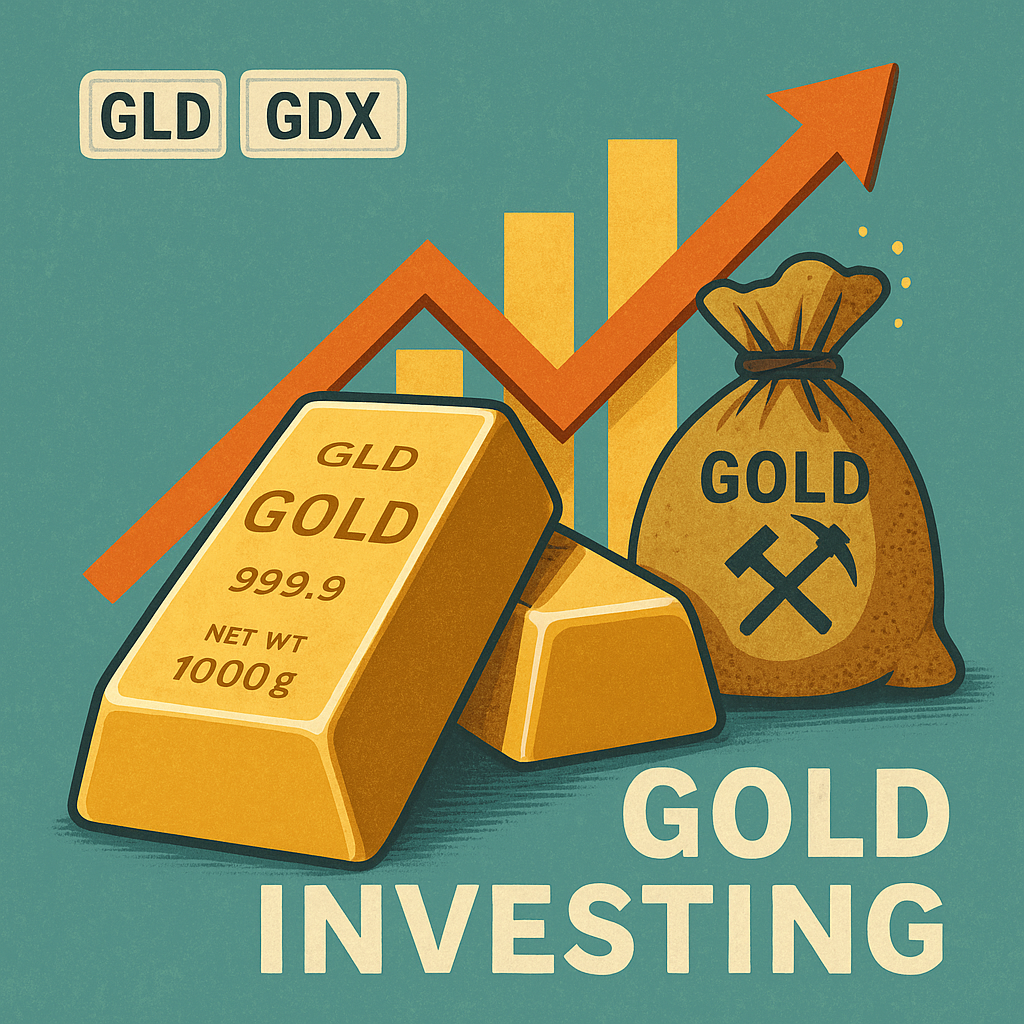
How to Invest in Gold — and How Gold ETFs Are Performing in 2025
If you want exposure to gold without buying bars or coins and storing them in a vault, ETFs are a popular, easy option. Here are 2–3 common ways to invest in gold through ETFs:
- Physical-gold ETFs: These track the spot price of gold and hold actual bullion — useful if you just want to ride the price of gold without worrying about storage or security. Examples include SPDR Gold Shares (ticker GLD) and iShares Gold Trust (ticker IAU). (The Motley Fool)
- Gold mining equity ETFs: Instead of holding gold directly, these invest in shares of mining companies. They can magnify gains when gold rallies — but also carry extra risks tied to mining operations and broader stock market volatility. Example: VanEck Gold Miners ETF (ticker GDX) (The Motley Fool)
Performance in 2025 (YTD):
- Physical-gold and gold ETFs have been among the year’s standout performers — many funds tracking bullion are delivering 40–60% year-to-date returns as of late 2025. (One Day Advisor)
- Gold-mining ETFs (the equity-based ones) have often outperformed bullion ETFs this year — some reporting YTD returns above 100%. (One Day Advisor)
So, if you’re curious about gold but don’t want the hassle of physical metal, ETFs give a flexible, liquid way to participate — and 2025 has shown how powerful that exposure can be.
What Is Gold, Really?
Most investments fall into one of these buckets:
- Assets – like stocks and bonds, which pay you cash (dividends, interest).
- Commodities – like oil or wheat, used to make other stuff.
- Currencies – like dollars or euros, used to buy things.
- Collectibles – like art or rare cards, valued for their scarcity and appeal.
Gold is a bit of a chameleon. Historically, it has been:
- A currency (gold coins)
- A commodity (used in jewelry, tech, dentistry)
- A collectible (store of value, status symbol)
Today, in financial markets, gold mostly behaves like a collectible and sometimes like a currency substitute. That has one big implication:
Gold doesn’t generate income. Its price is driven by what people feel and fear, not by cash flows.
You can value a stock by its earnings. You can value a bond by its interest payments.
With gold, you’re really just asking: What will someone else pay for it later?
Why Has Gold Been So Strong?
Gold’s price is influenced by three big forces:
1. Fear of Inflation
Gold is often called an “inflation hedge,” but that’s only partly true.
- It tends to do well during unexpected, high inflation (think 1970s).
- It doesn’t move much for mild, normal inflation.
In recent years, people have worried less about inflation today and more about what could happen: large government debts, big central bank balance sheets, and the fear that money might slowly lose its value. That fear pushes some investors toward gold.
2. Fear of Crises
Gold is also seen as a safe haven when the world feels risky:
- Geopolitical tensions
- Trade wars and tariffs
- Political instability
- Concerns about financial bubbles
When investors feel nervous about stocks, banks, or even governments, some of them reach for gold. It’s been a crisis “comfort blanket” for centuries.
3. Low Real Interest Rates
This is a bit technical, but important.
When you hold gold, you:
- Don’t earn interest or dividends.
- Give up whatever you could have earned in safe investments.
That “give up” cost depends on real interest rates (interest rates after inflation).
- When real rates are high, gold is less attractive.
- When real rates are low or negative, gold looks much better.
In our current environment, real rates have been low for long periods, which helps explain why gold has had so much support.
Gold’s Long-Term Performance — How It Compares to Stocks
If you had invested in gold 40 years ago versus investing in the S&P 500, the difference would be substantial. Over that period:
- Gold’s annual compounded return has been roughly 5.3% per year.
- The S&P 500’s annual compounded return has been roughly 11.4% per year.
That means, over decades, a portfolio of stocks would have grown dramatically more than a portfolio of gold. ✅ Takeaway: Gold has historically under-performed stocks if your goal is long-term growth.
Gold Supply — Why Its Scarcity Still Matters
One of gold’s strengths is its scarcity and the slow rate at which new gold enters circulation:
- It’s estimated that there are around 244,000 metric tons of gold above ground worldwide (in jewelry, bars, coins, etc.).
- Mining adds only a small incremental amount each year — meaning supply grows slowly and predictably.
Because new gold can’t just be “printed” like money, gold remains relatively rare. That scarcity helps preserve its value over long periods.
Why Gold Can Still Be Useful
Despite its long-term under-performance relative to stocks, gold offers a few compelling advantages — especially as a hedge or insurance.
✅ 1. Protection Against Extreme Events
Gold tends to shine when things go very wrong:
- Big inflation spikes
- Currency crises
- Deep financial stress
It’s not a perfect everyday hedge, but it’s one of the few things that can help when the system itself feels shaky.
✅ 2. Independence From Governments and Banks
Gold doesn’t depend on:
- Central banks doing the “right” thing
- Companies hitting earnings targets
- A government paying back its debts
That independence makes it a stabilizing addition if you worry about macro-economic or institutional risk.
✅ 3. Limited Supply and Durable Value
Because gold’s supply increases only slowly and it lasts virtually forever without degrading, it acts as a reliable store of value — especially when compared with money, which can be printed, or bonds, which rely on institutional safety.
But Gold Also Comes With Real Risks
Gold’s shine is real — but so are its drawbacks.
❌ 1. It Has Historically Lagged Stocks by a Wide Margin
Over long periods, stocks have far outpaced gold. If what you want is capital growth over decades, gold tends to disappoint.
❌ 2. It’s Volatile and Pays Nothing
Gold can boom, but it can also slump — sometimes staying flat for many years. And unlike stocks or bonds, you do not receive dividends or interest.
That means the only return you get is future price appreciation — which is uncertain and driven by sentiment.
❌ 3. Timing Is Hard
Gold’s biggest gains often happen during rare, extreme events. But trying to time those events is almost impossible. Many investors buy at highs or sell after a drop, missing the best outcomes.
So… Should You Add Gold to Your Portfolio?
It depends on what you want:
- If you want high long-term growth: Stocks (or other income-producing assets) are likely a better bet.
- If you want a little insurance: A modest allocation to gold (say 5–15% of your portfolio) can offer protection against severe inflation, currency risks, or financial crises.
Think of gold not as a growth engine — but as a safety net.
Gold can never replace the growth potential of productive investments. But in uncertain times, it may help preserve value when other investments struggle.
Final Thought: Gold Is a Tool — Not a Magic Bullet
Gold works best when used wisely and with realistic expectations.
- It’s not a guaranteed path to riches.
- It won’t pay you dividends.
- Its long-term return tends to trail equities.
But gold does offer a unique kind of protection: independence, scarcity, and resilience.
If you use it as a small hedge, not your financial foundation, gold can be a useful part of a balanced portfolio.
In a world full of uncertainty, maybe that’s enough.
